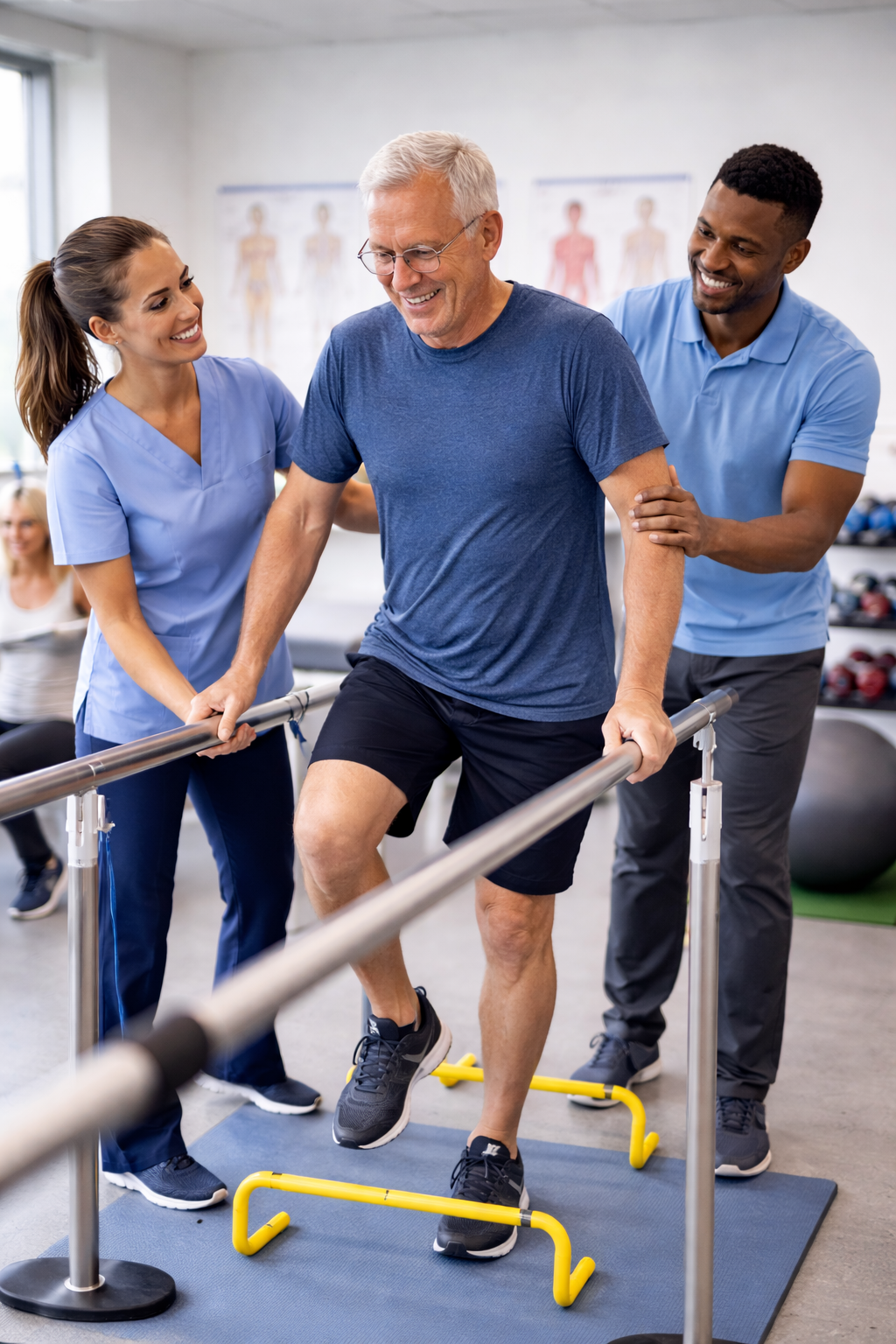
Orthopedic and Neurological Rehabilitation: Restoring Movement and Independence
Orthopedic and neurological rehabilitation are specialized physiotherapy services designed to help people recover movement, strength, and independence after injury, surgery, or neurological conditions. While orthopedic rehabilitation focuses on bones, joints, muscles, and ligaments, neurological rehabilitation addresses conditions affecting the brain, spinal cord, and nerves. Together, they provide comprehensive care for long-term recovery.
What Is Orthopedic Rehabilitation?
Orthopedic rehabilitation is aimed at treating musculoskeletal problems that affect movement and function. It focuses on restoring strength, flexibility, and joint mobility while reducing pain and stiffness.
Common conditions treated include:
- Fractures and joint injuries
- Post-surgical recovery such as knee or hip replacement
- Back pain, neck pain, and joint pain
- Arthritis and degenerative conditions
- Sports and work-related injuries
Treatment typically includes exercise therapy, manual therapy, electrotherapy, and posture correction.
What Is Neurological Rehabilitation?
Neurological rehabilitation helps individuals affected by disorders of the nervous system. These conditions can impact movement, balance, coordination, speech, and daily activities. The goal is to retrain the brain and nerves to improve functional ability.
Conditions commonly treated include:
- Stroke
- Spinal cord injury
- Parkinson’s disease
- Multiple sclerosis
- Nerve injuries and paralysis
Therapy focuses on improving motor control, balance, coordination, and independence in daily life.
Key Benefits of Combined Rehabilitation
When orthopedic and neurological rehabilitation are integrated, patients receive a holistic approach to care. This is especially important in cases where nerve and musculoskeletal problems occur together.
Benefits include:
- Improved strength and mobility
- Better balance and coordination
- Reduced pain and stiffness
- Faster and safer recovery
- Improved ability to perform daily activities
What to Expect During Rehabilitation
Rehabilitation begins with a detailed assessment to understand the patient’s condition, limitations, and goals. A personalized treatment plan is then designed, with regular monitoring and progression. Therapy sessions are guided, safe, and adjusted according to improvement.
Family education and home exercise programs are often included to support recovery beyond the clinic.
Supporting Long-Term Recovery
Orthopedic and neurological rehabilitation are not just about short-term relief. They focus on restoring confidence, independence, and quality of life. With consistent therapy and professional guidance, patients can achieve meaningful improvement and return to an active, functional lifestyle.
Orthopedic and neurological rehabilitation help rebuild movement, strength, and control, supporting recovery at every stage.