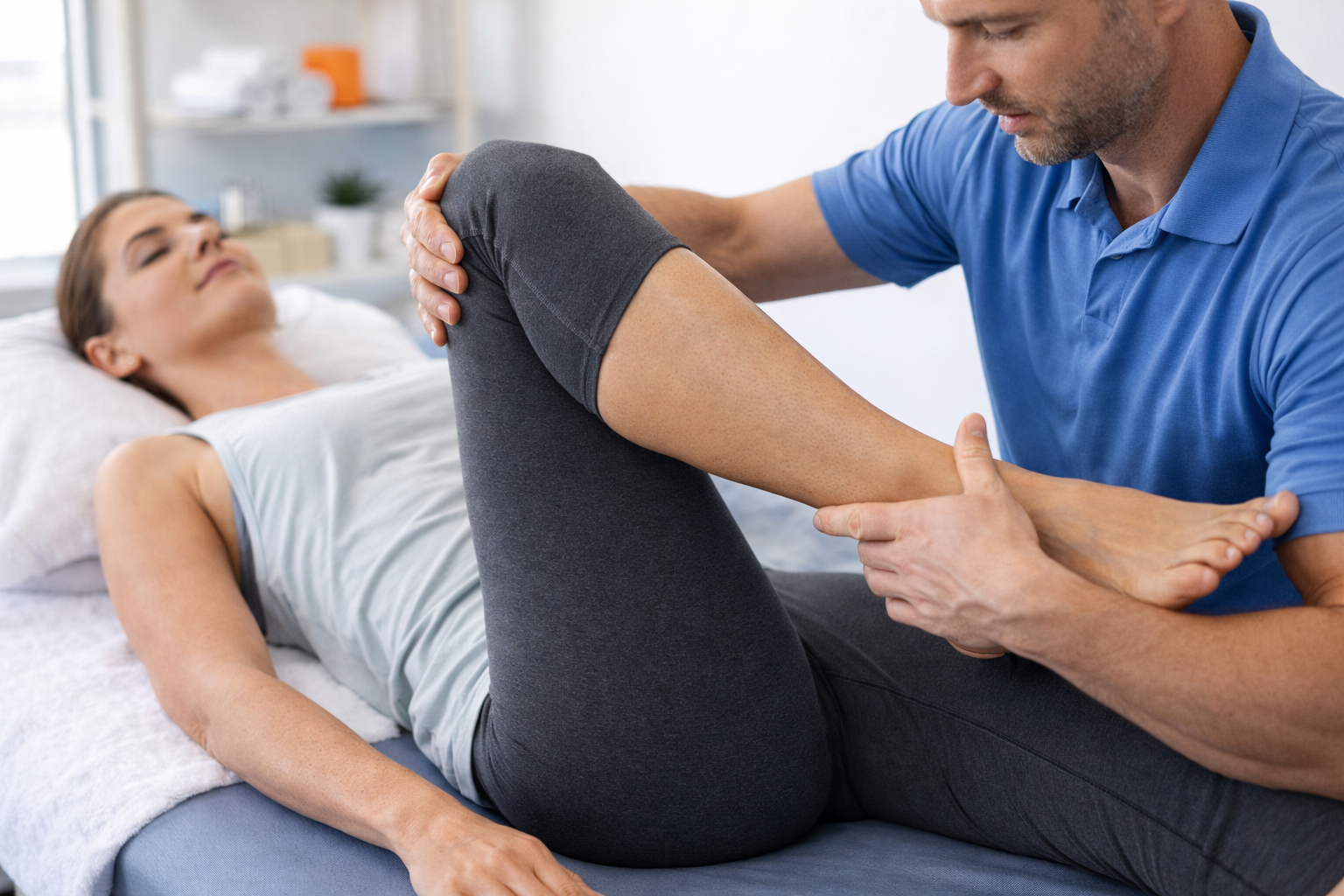
PNF Technique: Improving Movement Through Guided Control
PNF, or Proprioceptive Neuromuscular Facilitation, is an advanced physiotherapy technique used to improve movement, flexibility, strength, and coordination. It is widely used in rehabilitation to help patients regain normal and efficient movement patterns after injury, surgery, or neurological conditions.
What Is the PNF Technique?
PNF works by stimulating the body’s proprioceptors, the sensors in muscles and joints that control movement and balance. Through specific movement patterns, gentle resistance, and controlled stretching, PNF helps the nervous system and muscles work together more effectively.
Unlike simple stretching, PNF focuses on functional, diagonal movements that closely resemble everyday activities.
How PNF Technique Helps
PNF helps retrain the body by improving communication between muscles and nerves. It encourages better muscle activation and control.
Key benefits include:
- Improved flexibility and range of motion
- Increased muscle strength and endurance
- Better coordination and balance
- Reduced muscle stiffness and tightness
- Improved functional movement
Where PNF Is Commonly Used
PNF is effective in treating a wide range of conditions, such as:
- Post-injury and post-surgical rehabilitation
- Sports injuries and muscle imbalance
- Stroke and neurological conditions
- Joint stiffness and limited mobility
- Postural and movement control issues
It is often used alongside exercise therapy and manual therapy for best results.
What to Expect During a PNF Session
During a PNF session, the therapist guides the patient through specific movement patterns while applying light resistance or stretch. The therapist continuously adjusts the technique based on patient response, ensuring comfort and safety.
Patients may feel their movements becoming smoother, stronger, and more controlled over time.
A Smart Approach to Rehabilitation
PNF technique focuses on quality of movement, not just muscle strength. It helps the body relearn natural motion patterns, making daily activities easier and safer.
PNF is not just a treatment method. It is a practical and effective way to restore movement, improve stability, and support long-term recovery.