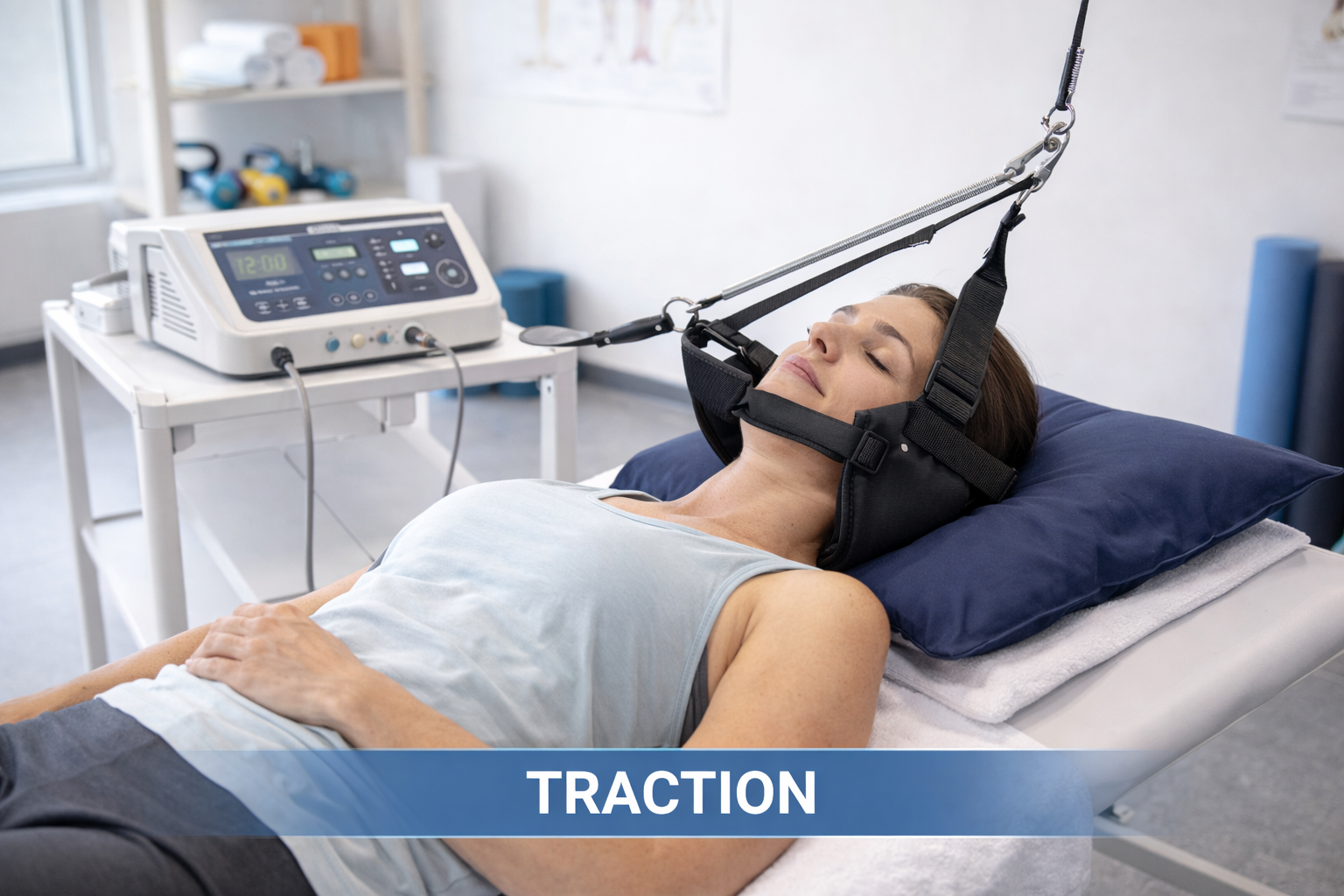
Traction Therapy: Gentle Relief for Spine and Nerve Pain
Traction therapy is a widely used physiotherapy technique that helps relieve pressure on the spine and surrounding nerves. It involves applying a controlled, gentle pulling force to the neck or lower back to reduce pain, improve mobility, and support natural healing. Traction is commonly used for cervical (neck) and lumbar (lower back) conditions.
What Is Traction Therapy?
Traction therapy works by gently stretching the spine. This creates space between the vertebrae, helping reduce pressure on discs, nerves, and joints. Traction can be applied manually by a physiotherapist or mechanically using specialized equipment, depending on the condition and patient comfort.
The treatment is safe, controlled, and carefully adjusted to individual needs.
How Traction Therapy Helps
Traction therapy provides relief by reducing compression and improving alignment of the spine.
Key benefits include:
- Reduces pressure on spinal nerves
- Relieves neck and lower back pain
- Helps manage disc-related problems
- Reduces muscle spasm and stiffness
- Improves spinal mobility and posture
Conditions Treated with Traction
Traction therapy is commonly used for:
- Cervical and lumbar disc bulge or herniation
- Neck pain and stiffness
- Sciatica and nerve-related leg pain
- Degenerative disc conditions
- Spinal joint compression
It is often combined with exercise therapy, electrotherapy, and posture correction for better results.
What to Expect During a Traction Session
During traction therapy, the patient lies comfortably on a treatment table. A harness or support is placed around the neck or lower back, and gentle traction is applied for a specific duration. The treatment is painless and relaxing, with many patients experiencing immediate relief.
Sessions are closely monitored to ensure safety and effectiveness.
A Safe and Supportive Therapy
Traction therapy helps relieve pain while allowing the spine to heal naturally. When performed by trained physiotherapists, it is a safe and effective method to manage spinal conditions and improve quality of life.
Traction therapy is not just about stretching the spine. It is about reducing pain, restoring movement, and helping patients return to daily activities with comfort and confidence.